
Review · HOI AN COUNTRYSIDE TOURS
Discover Traditional Silk Process in Hoi An Silk Village
Silk is made here by a chain of small, physical tasks: growing mulberry, feeding silkworms, unwinding thread from cocoons and weaving it into cloth. This 50-minute Hoi An Silk Village tour lets you watch that process in one visit. I like that it connects the garden to the finished fabric, and that the guide explains how to distinguish pure silk from imitation.
The cocoon-unraveling demonstration is a particular draw, but it comes with a plain fact: extracting the silk kills the silkworm. The visit also ends at a shop, where you can inspect and buy silk goods; if shopping is your priority, the selection of prints may feel limited.
At a glance
- From leaf to cloth: See mulberry growing, silkworm care, cocoon processing and weaving in one short visit.
- Hands-on craft context: The guide explains traditional sericulture and weaving methods associated with Champa and Dai Viet.
- A close look at silk: Watch thread being extracted from cocoons, then compare pure silk with imitation fabric.
- A compact stop: The scheduled visit lasts 50 minutes, a useful choice if you want a craft lesson without giving up much of your day.
- Shopping is optional: The exhibition shop has silk products, but the range of prints may not suit every taste.
- Simple logistics: Meet at 28 Nguyen Tat Thanh in Hoi An. The $11 price includes the guide, entrance fee and bottled water, but not transport or meals.
From Mulberry Leaf to Silk Thread
At the village, the craft is presented as a connected process rather than a rack of finished scarves and shirts. You begin with the plants that feed the silkworms, then follow the work through breeding, cocoon handling, thread extraction and weaving. That sequence makes the finished cloth easier to appreciate, and gives you a clearer sense of how much skilled labor sits behind a piece of silk.
The welcome drink is followed by a visit to a traditional house in Quang Nam, where the guide introduces the local history of sericulture, the raising of silkworms for silk. The account focuses on mulberry growing and the long-standing craft tradition in the area. The village also presents itself as a place preserving valuable mulberry genetic sources and handmade weaving methods linked to the Champa and Dai Viet eras.
That history is most useful when it stays connected to what you can see. Rather than treating silk as a vague symbol of Vietnamese heritage, the tour takes you into the places where the materials are grown and handled. You get a short, practical introduction to the work behind the fabric.
More countryside tours in Hoi An:
- Hoi An Countryside Jeep Tour: Food, Culture & Daily Life
★ 5.0 · 414 reviews - Hoi An Countryside Vespa Tour: Food, Culture & Daily Life
★ 5.0 · 406 reviews - Hoi An Countryside Bike Cycling Tour with Basket Boat and lunch
★ 5.0 · 325 reviews
The Mulberry Garden and Silkworm House
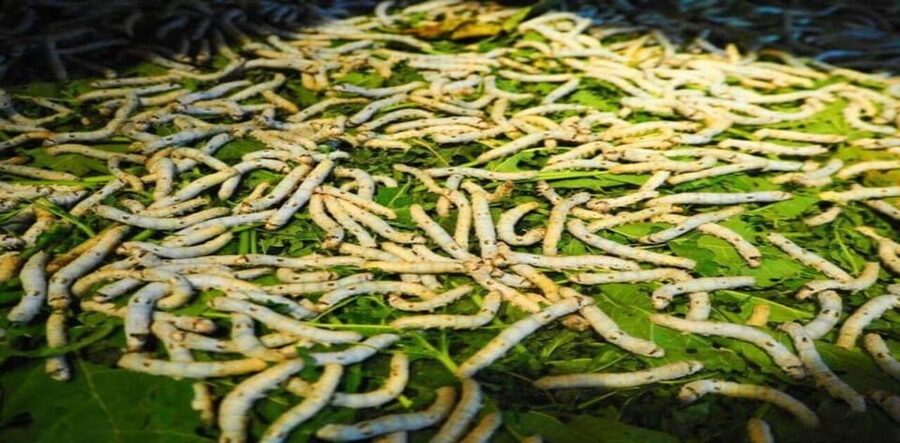
The mulberry garden is the starting point for understanding the process. Mulberry leaves feed silkworms, so the plants are not simply a pretty green backdrop. They are the first link in the production chain, and the garden helps explain why growing and tending the right plants matters to the craft.
Next comes the silkworm-breeding house, where you learn how the worms are raised and fed. This is a chance to see the living stage of silk production before the cocoon forms. If you are curious about how a fine thread begins, this stop gives you the context that a finished garment cannot.
The tour describes traditional methods of cultivating silkworms and removing cocoons. The details are valuable because they show that silk-making is not one dramatic trick, but a sequence of routine, careful work. The setting is an active craft environment, not just a display of finished objects, so rooms can feel close when several groups are present.
One visitor described a group of five, which made the small rooms manageable, but that is not a promised group size. School groups can also affect the timing: a scheduled start has been delayed when children arrived, with staff keeping the waiting visitor informed. If your day is tightly planned, allow some breathing room around the 50-minute visit.
Unraveling the Cocoon
The unraveling house is the tour’s most direct demonstration of how silk thread is obtained. You see the cocoon being worked so that its fine filament can be drawn out and used for weaving. This step turns the process from an abstract explanation into something you can follow with your eyes.
There is an ethical detail worth knowing before you go: extracting silk from the cocoon kills the silkworm. One visitor found this the most memorable part of the visit. You do not need to approve of the process to learn from it, but it is better to arrive prepared than to encounter the fact as a surprise.
This stop also helps explain why silk is valued. The thread is delicate, and producing it requires skilled handling before a weaver can even begin. The demonstration is brief, but it links the silkworm house to the loom in a way that makes the whole visit feel coherent.
Watching Traditional Weaving
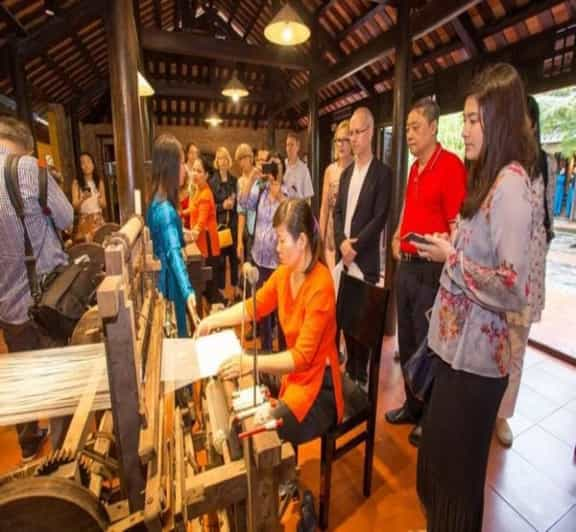
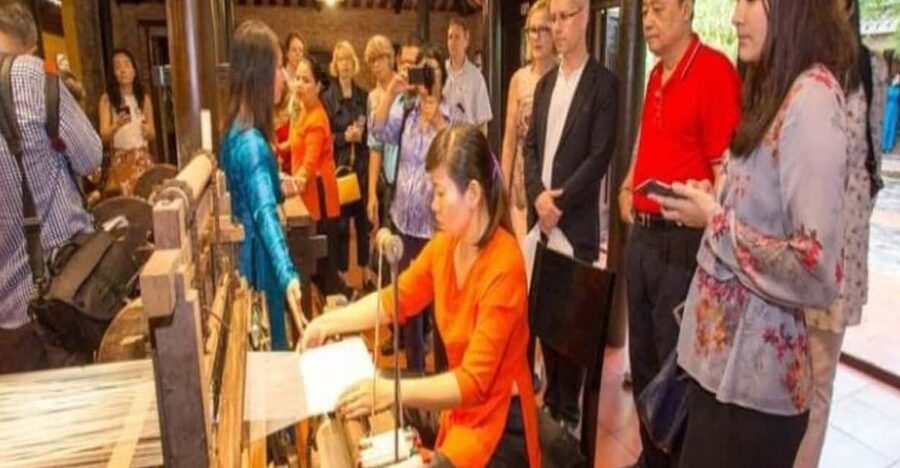
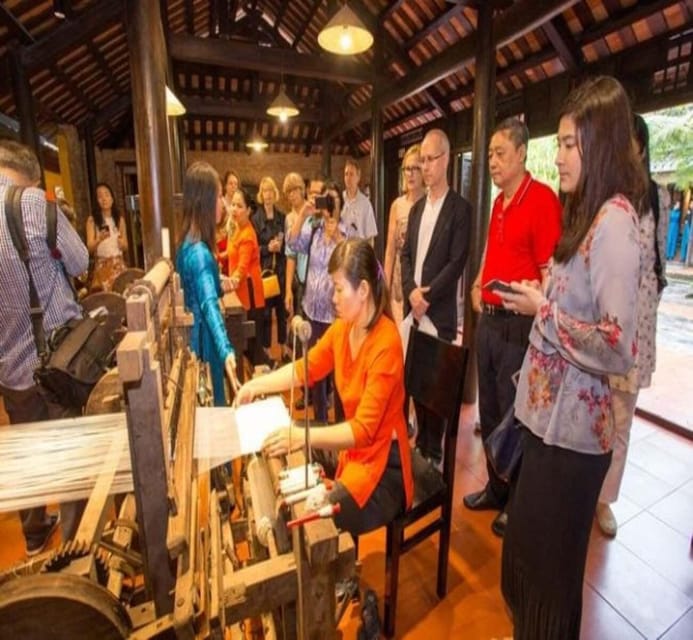
At the weaving house, workers demonstrate how silk thread becomes fabric. You can watch the movements and tools involved, and the guide explains traditional textile-making associated with Champa people. The village describes its handmade methods as part of a craft tradition extending from the Champa and Dai Viet eras.
This is not a long workshop where you sit at a loom and make your own cloth. It is a guided look at the work and the people who do it. That distinction matters: if you want a hands-on class, this short tour is not advertised as one. If you want to see the technique and ask questions, the demonstration is a better fit.
Guides Thu and Tsu have been praised for clear English and patient answers. Your own guide may be someone else, but the tour is conducted in English, and the guide is central to making sense of each stop. The weavers also help bring the craft to life; their work is not just a backdrop for the explanation.
Same town, a different kind of day:
- Hoi An: Basket Boat Ride in the Coconut Forest
★ 4.9 · 4,956 reviews - Hoi An: Vietnamese Coffee Culture and Coffee Making Class
★ 4.9 · 4,006 reviews - Hoi An: Vietnamese Foldable Lantern Making Class
★ 4.9 · 3,742 reviews - Cooking Class Hoi An:Local Market, Basket Boat, Fishing & Cooking
★ 5.0 · 3,660 reviews
The Exhibition and Silk Shop
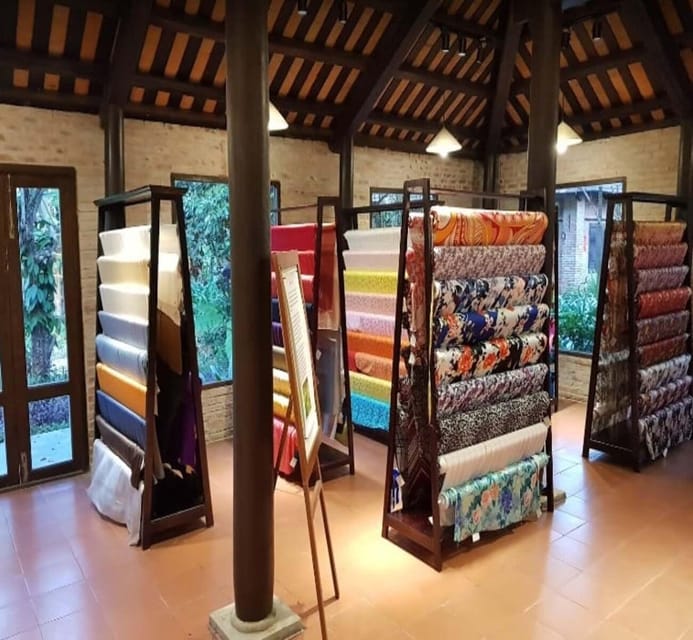
The final stop is the exhibition, where you learn how pure silk differs from imitation fabric. This is one of the most practical parts of the visit if you plan to shop in Hoi An. Fabric can look appealing under shop lights, but understanding what you are comparing gives you a better basis for deciding what is worth buying.
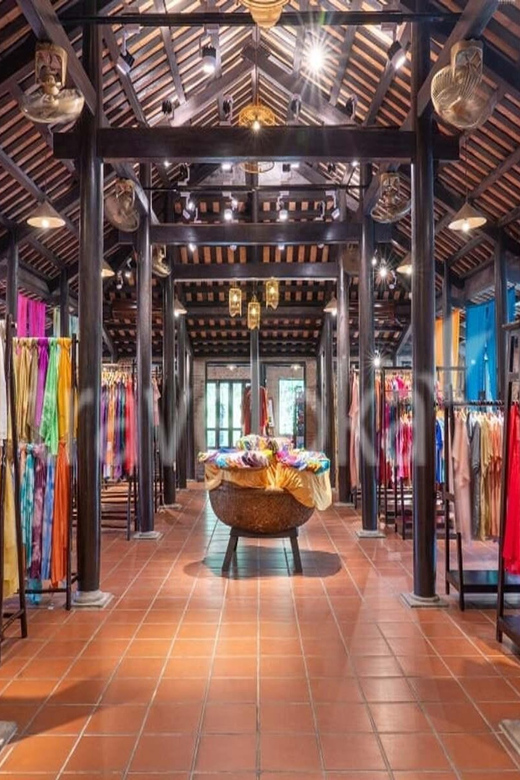
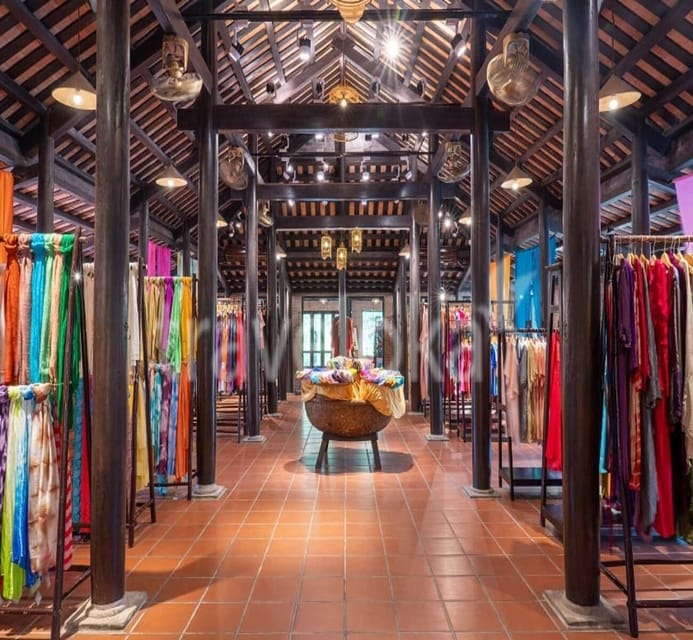
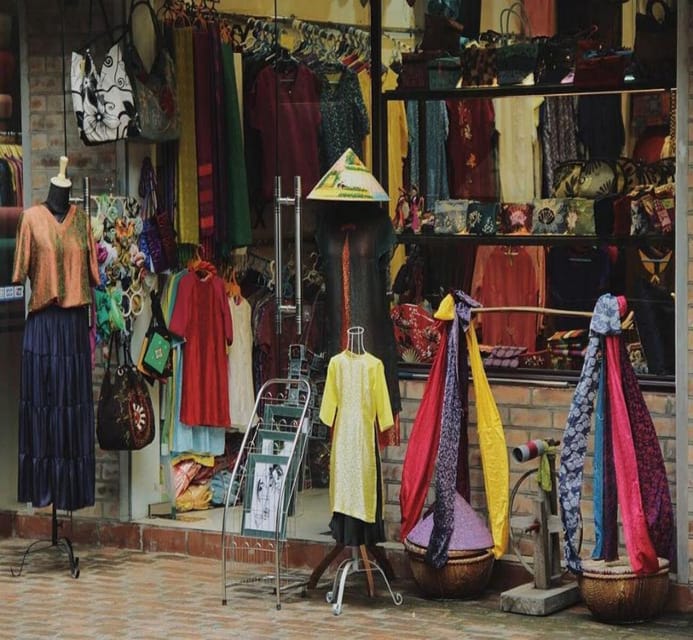
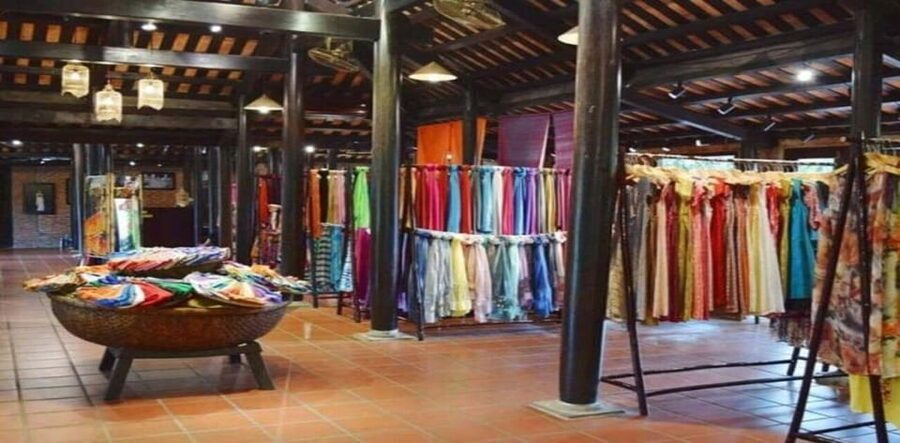
The display leads into a shop with silk products for purchase, including garments and fabric. Some people find the silk shirts good value for their quality, and one visitor who had not planned to buy a shirt changed their mind after seeing the goods. You can use the visit to make a more informed purchase, but there is no need to buy anything to get value from the tour.
The selection is not guaranteed to please everyone. One shopper found the prints limited and the color combinations too busy. If you have a particular pattern or color in mind, do not assume you will find it here. Treat the shop as a convenient place to inspect silk, not as a complete answer to every tailoring or gift-shopping need.
There is a cafe on site, which can make the village a comfortable pause in the day. The tour itself is short, so the cafe is a useful extra if you want to linger, rather than a reason to expect a meal as part of the visit. Meals are not included.
What $11 Buys You
At $11 per person, the price covers a 50-minute guided visit, entrance fee and bottle of water. That is fair value if you want a concise introduction to a traditional craft and demonstrations of several stages, especially the cocoon-to-thread process and weaving. You are paying for interpretation as much as entry: without a guide, the garden, workrooms and fabric samples would tell only part of the story.
The low price does not include hotel pickup or drop-off, meals, or personal expenses. You need to make your own way to the meeting point at 28 Nguyen Tat Thanh, Hoi An, and tell reception your name as booking confirmation. Check the available start times when arranging your visit.
The tour is a particularly sensible choice if you have an hour to spare and want an activity that is different from walking the old town or browsing shops. It has also worked well as a private visit when no other English-speaking participants were present, though you should not count on having a private guide. Groups may be small, but the size can vary.
Who Should Make Time for It
I would put this tour on the list for anyone curious about textiles, traditional production or the everyday work behind a material often treated as a luxury. It also suits visitors who want a compact cultural stop, a guided explanation in English and a chance to ask questions without committing half a day.
It is less suitable if mobility is a concern. The activity is not suitable for wheelchair users or people with mobility impairments, and the work areas may have limited room. Wear comfortable shoes and clothes, and leave luggage or large bags behind, as they are not allowed.
If shopping is your main goal, keep expectations measured. You will learn how silk is made and how to distinguish pure fabric from imitation, which can help you shop more wisely, but the print range may be narrow. If you want a specific design, you may prefer to compare choices elsewhere in Hoi An before buying.
Should You Book the Silk Village Tour?
Book it if you want a clear, short lesson in the silk-making process, especially if you are interested in seeing cocoons turned into thread and watching weaving in progress. The English guide, connected itinerary and modest price make it a useful addition to a Hoi An day.
Skip it if you need a fully accessible visit, want a long practical weaving class, or expect an extensive shopping selection. For most curious visitors with 50 minutes free, though, it offers a grounded look at how silk begins, and why the finished cloth takes so much care.
FAQ
How long does the tour last?
The tour lasts 50 minutes. Check available start times when booking.
What is included in the $11 price?
The price includes an English-speaking guide, entrance fee and a bottle of water. Hotel pickup and drop-off, meals and personal expenses are not included.
Where is the meeting point?
Meet at 28 Nguyen Tat Thanh, Hoi An, Quang Nam, Vietnam. Give your name at reception as confirmation of your booking.
What will I see during the visit?
You visit a traditional Quang Nam house, mulberry gardens, the silkworm-breeding house, an unraveling house, a silk-weaving house and the village exhibition.
Is the tour available in English?
Yes. The live tour guide speaks English.
What should I bring, and are there items I cannot bring?
Wear comfortable shoes and clothes. Luggage and large bags are not allowed.
Can I cancel, and do I have to pay when I reserve?
You can cancel up to 24 hours in advance for a full refund. The reserve-now, pay-later option lets you book without paying at the time of reservation.
Newest tours in Hoi An
- Hoi An to Dong Hoi rides by Private Car service★ 5.0 · 4 reviews
- Private Taxi from Hoi An to Da Nang by Sedan/SUV/16 Seats★ 5.0 · 3 reviews
- Private Car Rental from Hoi An to Hue★ 5.0 · 3 reviews
- Hoi An Photographer & Vacation Photoshoot – Private Session★ 5.0 · 7 reviews
- Hoi An to Da Nang Transfer – By Car★ 4.5 · 13 reviews
- Hoi An Street Food Tour By Scooter★ 5.0 · 13 reviews
- BaNa Hills with Golden Bridge 1 Day Tour from Hoi An/Da Nang★ 5.0 · 19 reviews
- Ba Na Hills, Da Nang & Hoi An Optional Private Tour★ 5.0 · 8 reviews
Hoi An Countryside Tours, compared.

Hoi An Countryside Jeep Tour: Food, Culture & Daily Life
Read our review →
Hoi An Countryside Bike Cycling Tour with Basket Boat and lunch
Read our review →

Countryside Bicycle To-Trà Quế village,Carpentryvillage,makingMat
Read our review →
Hoi An Countryside Biking Tour(Vegetable village -basket boat – fishing village)
Read our review →
Browse the lists this tour appears in