
Review · HOI AN ANCIENT TOWN TOURS
Hoian Old Town – Immersive Free Walking Tour
Hoi An makes most sense at walking speed: wooden merchant houses, assembly halls and the Japanese Covered Bridge sit close enough to link into a compact introduction to the old port. I like the local guide’s cultural stories and the chance to spend a substantial part of the tour at a traditional arts performance, not just hurry past another historic doorway.
One point to plan around: the advertised price is $10 per person, but the tour is described as tip-based, and tickets for UNESCO attractions cost extra. The different stop lists also name different old houses and assembly halls, so ask which interiors are included before you set off.
Key points
- A useful first walk: The two-hour route starts at 125 Phan Chu Trinh and finishes at Hoi An Market.
- The bridge is a headline stop: Allow about 10 minutes at the Japanese Covered Bridge.
- The performance gets real time: The traditional arts theatre is scheduled for 45 minutes, a substantial portion of the tour.
- The group stays small: No more than five participants, with an English-speaking guide.
- Budget beyond the listed price: Attraction tickets cost $5 (120,000 VND) per ticket; suggested tips are 250,000 to 400,000 VND per person.
- Confirm the exact route: The named itinerary and the broader list do not give identical houses and assembly halls.
A short walk into Hoi An’s trading past
Hoi An was an important trading port from the 16th century, with Chinese, Japanese, Portuguese and European connections. That mix is easier to understand when you see the old buildings in sequence, rather than encountering them as isolated photo stops. A guide can connect the architecture to the people and trading cultures that shaped the town.
This tour is designed as a quick orientation, not a full day of historical study. In two hours, you get a local perspective, a handful of major sights and an extended performance stop. That makes it a sensible opening activity if you have just arrived and want to decide which streets or sites deserve a slower return visit.
The group cap of five should help keep the walk personal. You can ask questions without competing with a large crowd, and the guide can share stories that are hard to pick up from a plaque. The tour is in English. Quoc Le is the named experience provider, though no individual guide name is given.
More Ancient Town tours in Hoi An:
- Hoi An Ancient Town Walking Tour with a Local
★ 5.0 · 517 reviews - The Lantern Lady: Traditional Lantern Class in Old Town
★ 4.9 · 444 reviews - Hoi An Ancient Town – Walking Tour with Local Guide
★ 4.9 · 385 reviews
Starting on Phan Chu Trinh
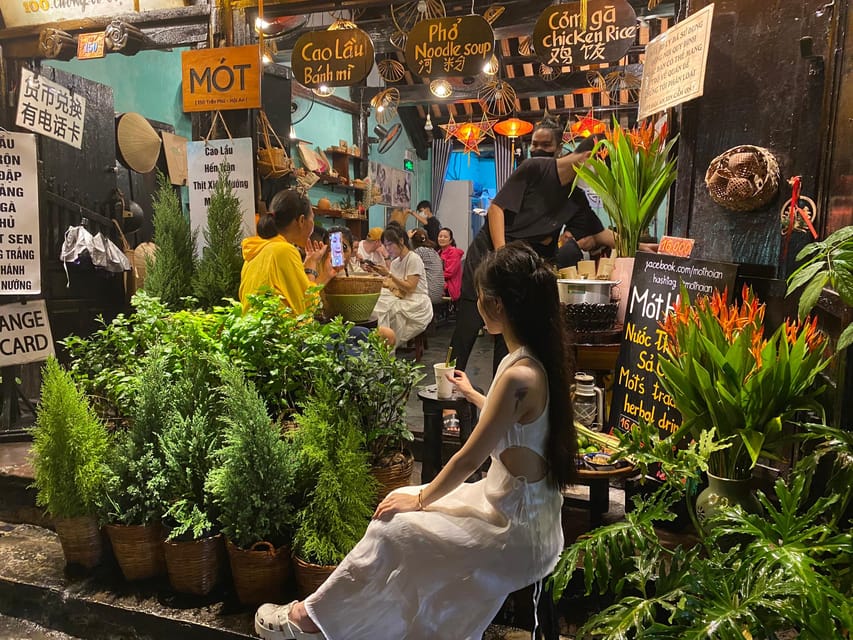
Meet at 125 Phan Chu Trinh. The guide is identified by a white T-shirt and shoulder bag, a simple detail that should make a street-side meeting easier. The walk ends at Hoi An Market, so you finish in a practical spot for continuing your own exploration.
The tour is recommended as an early activity after arrival, and that is good advice. Hoi An’s old quarter is compact, but a short guided walk gives you a basic map of its landmarks and cultural layers. You can then return to the places that interest you most, instead of spending your first afternoon guessing which old house is which.
Wear comfortable clothes. The tour runs rain or shine, so bring suitable protection if wet weather is expected. The clothing guidance also says not to wear loose or see-through clothing. People over 95 are listed as not suitable for the activity.
The Japanese Covered Bridge in ten minutes
The Japanese Covered Bridge is one of Hoi An’s best-known landmarks, and a natural anchor for a first walk. It reflects the town’s historical connections with Japanese merchants. The itinerary allows about 10 minutes here, enough for a close look and some explanation, but not a long visit.
The bridge is also called the Japanese Covered Bridge Pagoda in the tour’s stop list. Because it is both a landmark and a frequently photographed site, a guide’s context matters: you are not just checking off a familiar image, but hearing how it fits into the old port’s story.
Keep expectations measured. Ten minutes is a brief stop, and any required attraction ticket is separate from the tour cost. If you want a longer look or time to explore the interior at your own pace, plan to come back after the walk.
Old houses and the lives behind the facades

The scheduled route names the Old House of Tan Ky, with about 10 minutes for a visit. The broader set of places associated with the walk also includes Phung Hung Ancient House and a Japanese Culture Ancient House. These traditional homes help show how Hoi An’s past remains visible in the shape and use of its old buildings.
A short stop can give you a useful first impression, though it will not allow a long, unhurried inspection of every room. Treat it as an introduction. If a particular house catches your attention, note its name and return later if your schedule allows.
There is a small but important route detail to settle before booking. The timed itinerary names Tan Ky, while the wider list names Phung Hung. Those are separate houses, so do not assume that both are guaranteed stops. Ask the guide which house is planned for your departure date.
More walking tours in Hoi An:
- Evening Walking Food Tour, folk game and lantern boat
★ 5.0 · 665 reviews - Hoi An Street Food Walking Tour with Tastings
★ 5.0 · 317 reviews - Hoi An Walking Tour
★ 5.0 · 269 reviews - Hoi An Night Market with Hoi an walking Tour , Colourful Lanterns, Boat Ride
★ 5.0 · 142 reviews
A 45-minute pause for traditional arts
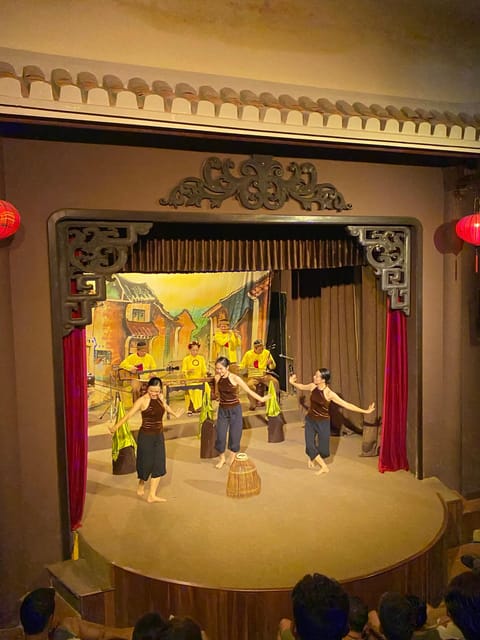
The Hoi An Traditional Art Performance Theatre is the longest scheduled stop, at 45 minutes. That is a meaningful share of a two-hour walk. Instead of giving every landmark the same quick glance, the tour makes room for music and dance as part of its account of local culture.
For many people, this will be the most distinctive part of the outing. The performance gives you a change of pace from walking and architecture, and it offers a cultural experience with a clear start and finish. It is also a better fit for visitors who want more than a photo tour.
The trade-off is time. With nearly an hour at the theatre, the outdoor stops are necessarily brief. If you prefer to spend your entire tour wandering streets and lingering at buildings, this schedule may feel too structured. If you enjoy a mix of walking and a staged performance, the balance makes more sense.
Assembly halls, Kazik Park and the market
The route includes an assembly hall, but the names differ across the tour details. The timed itinerary identifies Fujian Assembly Hall, while the wider route list names Cantonese Assembly Hall. Kazik Park is also included in the broader list, though it is not given a timed stop in the itinerary.
Hoi An’s assembly halls are worth understanding as more than decorative buildings. They speak to the communities that came to trade and settle here. A guide can help you see why these halls matter within the town’s mix of Chinese, Japanese and European influences, even if the visit itself is short.
The final stop is Hoi An Market, a practical finish that puts you near local daily life rather than ending at an isolated monument. The activity description refers to enjoying seafood specialties, but no meal or tasting appears in the timed itinerary, and food is not listed as included. Likewise, surrounding landscapes are mentioned generally, but the route provided is an old-town walk. Book this for heritage and orientation, not a seafood meal or countryside outing.
What the price really means
The advertised price is $10 per person, but the tour is also described as tip-based. The distinction matters: do not assume that the $10 settles all costs. Entrance tickets for UNESCO attractions are listed at $5, or 120,000 VND, per ticket, and the suggested guide tip is 250,000 VND per person for a nice experience or 300,000 to 400,000 VND for a great one.
Since the exact ticket count and payment arrangement are not spelled out, confirm the total you should expect to pay before the tour. The suggested tip is substantial compared with the $10 advertised price, so it belongs in your budget calculation, not in the fine print of your memory.
The value depends on what you want. For a small-group introduction with an English-speaking local guide, the price can be worthwhile, especially on your first day. But it is not a low-cost, ticket-included tour. You are paying separately for access to UNESCO attractions and choosing a tip for the guide.
The booking terms allow free cancellation up to 24 hours in advance, and you can reserve now and pay later. Check available starting times when booking. Those options offer flexibility, but they do not change the separate ticket and tip costs.
Who should take this walk
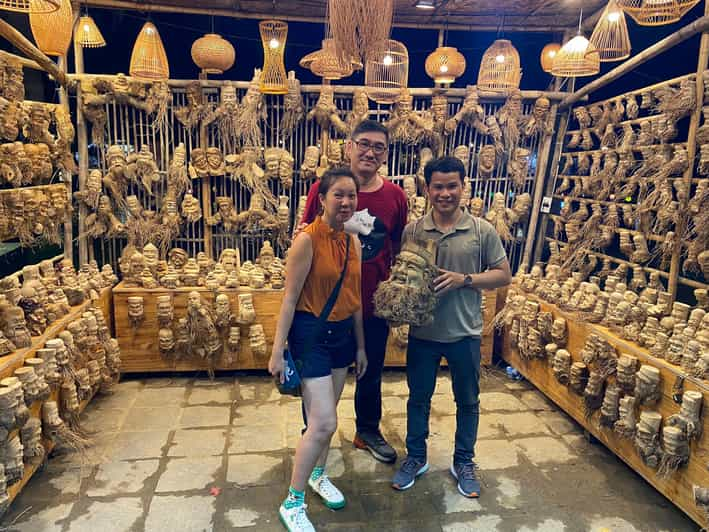
I would choose this tour if you want a compact introduction to Hoi An, prefer a small group and like hearing local context as you visit major sights. It suits first-time visitors especially well, since the guide can help you get oriented before you explore further on your own.
It is also a good match if you want a cultural performance built into your walk. The 45-minute theatre visit gives the experience more variety than a route made only of short stops. The listed schedule is quite specific, however, so it may not suit someone who wants to wander at an open-ended pace.
You may want to skip it if your priority is a food tour, a countryside excursion or long visits inside every historic building. Those are not clearly part of the scheduled experience. And if you are comparing prices, add the required ticket costs and suggested tip before deciding that the $10 figure is the full expense.
Should you book it?
Book this walk if you want a friendly, small-group starting point for Hoi An’s old quarter, with a local guide, major landmarks and a traditional arts performance. Its strongest appeal is the combination of cultural explanation and a manageable route, not an exhaustive visit to every old house.
Before you commit, ask which house and assembly hall your departure will visit, and confirm the ticket and tip arrangements. If those details suit your budget and you are happy with brief landmark stops, this is a practical way to get your bearings and hear the stories behind the streets.
FAQ
How long is the walking tour?
The tour lasts two hours.
What language does the guide speak?
The live tour guide speaks English.
How many people can join the group?
The group is limited to five participants.
Where does the tour start and finish?
It starts at 125 Phan Chu Trinh and finishes at Hoi An Market.
Are attraction tickets included?
No. Tickets are required for UNESCO attractions and are listed at $5, or 120,000 VND, per ticket.
What happens if it rains?
The tour operates rain or shine.
Newest tours in Hoi An
- Hoi An to Dong Hoi rides by Private Car service★ 5.0 · 4 reviews
- Private Taxi from Hoi An to Da Nang by Sedan/SUV/16 Seats★ 5.0 · 3 reviews
- Private Car Rental from Hoi An to Hue★ 5.0 · 3 reviews
- Hoi An Photographer & Vacation Photoshoot – Private Session★ 5.0 · 7 reviews
- Hoi An to Da Nang Transfer – By Car★ 4.5 · 13 reviews
- BaNa Hills with Golden Bridge 1 Day Tour from Hoi An/Da Nang★ 5.0 · 19 reviews
- Hoi An Street Food Tour By Scooter★ 5.0 · 13 reviews
- Ba Na Hills, Da Nang & Hoi An Optional Private Tour★ 5.0 · 8 reviews
Hoi An Ancient Town Tours, compared.


The Lantern Lady: Traditional Lantern Class in Old Town
Read our review →
Hoi An Night Market – Ancient Town street food tours by Night
Read our review →

Hoi an Coconut Boat & Hoi an Ancient Town(Option Marble Mountain)
Read our review →
Hoi An Ancient town -Marble Mountains Tours FROM DANANG(15H30-21H
Read our review →

Hoi An Ancient Town And Countryside Tour Full Day
Read our review →Browse the lists this tour appears in